
Emotional intelligence: Meaning and how to develop it
Reviewed by Robert Bogenberger, PhD

Written by
therapist.com team11/19/2026
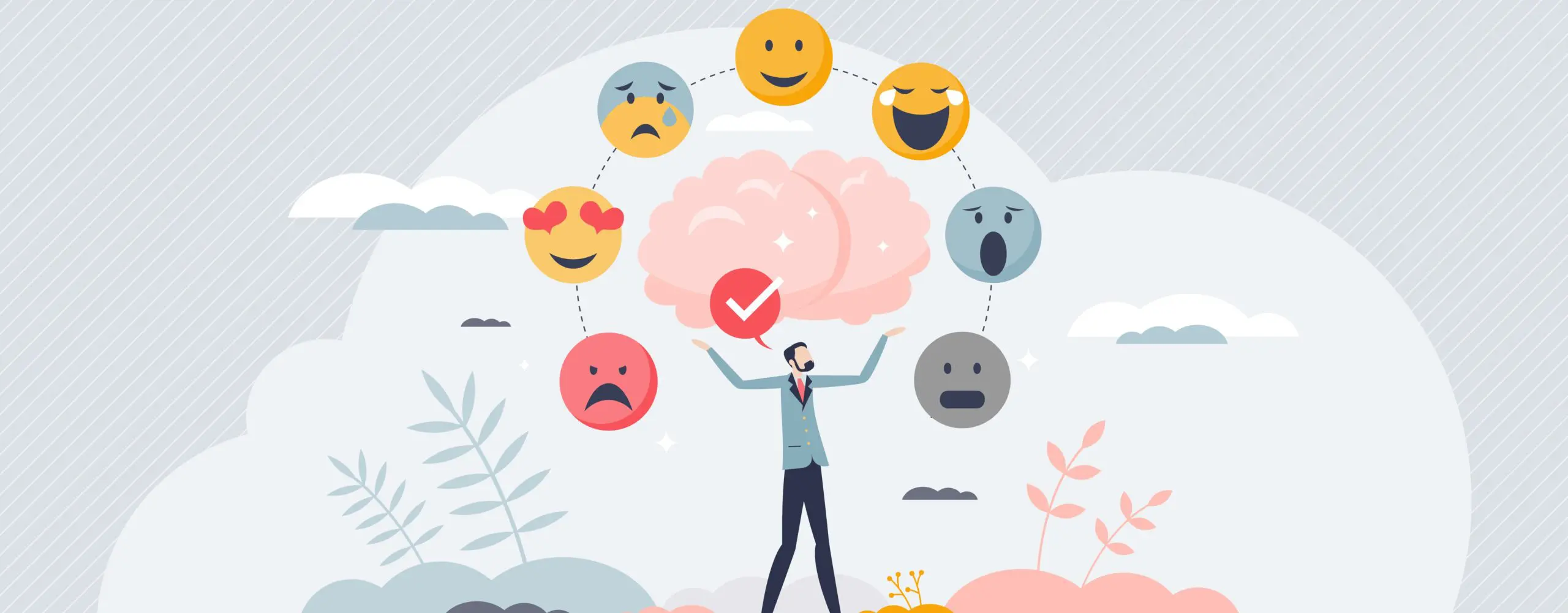
Have you ever wondered why some people seem to handle stress better than others? Or why a particular person you know naturally connects with other people? The answer often lies in emotional intelligence.


What is emotional intelligence?
Emotional intelligence (also known as EI or EQ) refers to the ability to receive, express, interpret, and manage emotions.1 Think of it as your emotional skill set; the tools you use to navigate your feelings and relationships with others.
Emotional intelligence includes several core elements, including:2
- Self-awareness: Recognizing your own emotions as they happen
- Self-regulation: Managing your emotional responses appropriately
- Empathy: Understanding and sharing the feelings of others
- Social skills: Building and maintaining healthy relationships
These elements work together to help you understand yourself better and connect more meaningfully with others.
Signs of high emotional intelligence
People with strong emotional intelligence often display specific behaviors that set them apart. Here are some key indicators:
Handling stress well
People with high emotional intelligence tend to reconsider stressful situations in ways that lower their emotional impact.3 For example, during an argument with a friend, they might see things from the other person’s perspective to feel less upset. One study found that emotional intelligence and perceived stress were negatively correlated, while EQ was positively correlated with both life satisfaction and mental resiliency.4
Building strong relationships
High emotional intelligence is linked to positive social behaviors including cooperation, helping others, and strong interpersonal skills.5 People with high EI tend to excel at managing conflicts and communicating effectively.6
Making sound decisions under pressure
It’s been shown that even in high-stress situations, people with high emotional intelligence can make decisions that reflect accuracy, timeliness, and prioritization.7 They don’t let emotions cloud their judgment. Instead, they use emotional information to guide their thinking effectively.
Reading people well
People with high emotional intelligence are often good at emotional perception. This means they have the ability to accurately identify emotions in others through facial expressions, body movements, and tone of voice.8 They notice subtle emotional cues that others might miss, which helps them respond well in social situations and build stronger connections.
Regulating emotions skillfully
Another sign of emotional intelligence is having good emotional regulation skills. This is the ability to manage emotions in ourselves, and even in others, to help achieve desired outcomes.9 People with strong emotional regulation skills can stay calm when needed and can help others work through difficult feelings.
Signs of low emotional intelligence
There are many reasons why a person may struggle to be emotionally present or manage difficult feelings when they happen. It’s impossible to always navigate and manage emotions “perfectly.” But learning the signs of low emotional intelligence can help you identify areas for personal growth. Here are some common indicators:
Difficulty reading social cues
People with lower emotional intelligence may struggle with identifying emotions in the facial expressions of others.10 They may feel confused about their own feelings and have difficulty expressing themselves. This can lead to misunderstandings and strained relationships.
Social struggles
In younger people, low internal emotional intelligence can show up us as lowered empathy and self-esteem, introversion, and struggles with conflict resolution. Research suggests that adolescents who struggle to understand and manage their own emotions engage in more face-to-face bullying, cyberbullying, hostility, and antisocial behavior.11
Less resilience to stress
Research shows that emotional intelligence is associated with better coping skills when facing everyday stressors.12 People with lower emotional intelligence may struggle more with stress management compared to those with higher emotional intelligence.
Workplace performance
In professional settings, low emotional intelligence can impact success. One study found that teams with lower collective emotional intelligence scores performed at lower levels in their initial performance compared to teams with high scores.13
Increased burnout risk
In professions where working with people is needed, burnout is common. Emotional intelligence can help protect against burnout by increasing job satisfaction and reducing job stress in emotionally demanding roles.14
If any of these challenges sound familiar, a therapist can help. They can help you build the skill of emotional regulation, understand your emotions, and manage stress more effectively.
How to develop emotional intelligence
The good news is that emotional intelligence can be improved at any age and increases with experience.15 Whether you’re looking to strengthen your emotional skills for work, relationships, or personal growth, there are several evidence-based approaches you can try.
Simple daily practices
Start by slowing down your emotional reactions. When you feel upset or angry, take a moment to pause and breathe before responding. Ask yourself: Why am I feeling this way? What triggered this emotion and why does it feel so strong? This simple practice helps you improve your understanding of your own emotions before they take control.16
Practices like this are simple, but not easy. It takes time to learn how you want to show up during stressful events. Give yourself permission to ask for time or walk away when situations feel overwhelming.
Lifestyle habits that support emotional intelligence
Several lifestyle choices can naturally boost your emotional intelligence:
- Mindfulness: Research on an eight-week mindfulness training program showed that participants reported increased emotional clarity. 17 The practice helped them recognize and manage their own emotions, a key piece of emotional intelligence.
- Quality sleep: In one study of high-stress workers with sleep disorders, a sleep-schedule based therapy was linked to gains in self-reported emotional intelligence.18 This fits broader research suggesting that quality sleep is important in recognizing and managing emotions.
- Skill building: In one study, university students who took a physical education course built around emotional learning reported small improvements in noticing and understanding their own feelings.19 Emotional skills can be taught; it’s important to seek out books, peers, and other resources that emphasize them.
Can therapy improve emotional intelligence?
Working with a professional can speed your emotional growth. It may be especially helpful if you’re struggling with emotion regulation or facing specific challenges that make you feel stuck.
Structured emotional intelligence training programs have shown promise. One trial, focused on older adults, centered on weekly 90-minute sessions of psychoeducation and coping skills training.20 Participants reported better emotional clarity and regulation as well as healthier coping.
For people dealing with emotional dysregulation, structured programs focused on growing skills can help. A recent trial asked participants to complete 12 weeks of either a compassion focused therapy-based program or an emotional competency training.21 At the end of either program, participants had less trouble regulating emotions and fewer symptoms of depression, anxiety, and stress than the control group.
Compassion focused therapy may be especially helpful if you’re struggling to manage shame or self-criticism. The approach was developed with both emotions in mind.
Finding professional support
If you’re ready to work on your emotional intelligence with professional guidance, a trained therapist can provide personalized support tailored to your specific needs and goals. Visit our therapist directory to find a qualified provider online or in your area who can help you develop these crucial life skills.

Sources
¹ Bru-Luna, L. M., Martí-Vilar, M., Merino-Soto, C., & Cervera-Santiago, J. L. (2021). Emotional intelligence measures: A systematic review. Healthcare, 9(12), Article 1696. https://doi.org/10.3390/healthcare9121696
² Mental Health America. (2026, April 8). What is emotional intelligence and how does it apply to the workplace? https://mhanational.org/resources/what-is-emotional-intelligence-and-how-does-it-apply-to-the-workplace/
³ Megías-Robles, A., Gutiérrez-Cobo, M. J., Gómez-Leal, R., Cabello, R., Gross, J. J., & Fernández-Berrocal, P. (2019). Emotionally intelligent people reappraise rather than suppress their emotions. PLOS ONE, 14(8), Article e0220688. https://doi.org/10.1371/journal.pone.0220688
⁴ Kartol, A., Üztemur, S., Griffiths, M. D., & Şahin, D. (2024). Exploring the interplay of emotional intelligence, psychological resilience, perceived stress, and life satisfaction: A cross-sectional study in the Turkish context. BMC Psychology, 12(1), Article 362. https://doi.org/10.1186/s40359-024-01860-0
⁵ Bru-Luna, L. M., Martí-Vilar, M., Merino-Soto, C., & Cervera-Santiago, J. L. (2021). Emotional intelligence measures: A systematic review. Healthcare, 9(12), Article 1696. https://doi.org/10.3390/healthcare9121696
⁶ Mental Health America. (2026, April 8). What is emotional intelligence and how does it apply to the workplace? https://mhanational.org/resources/what-is-emotional-intelligence-and-how-does-it-apply-to-the-workplace/
⁷ Ayed, A. (2025). The relationship between the emotional intelligence and clinical decision-making among nurses in neonatal intensive care units. Sage Open Nursing, 11. https://doi.org/10.1177/23779608251321352
⁸ Garaigordobil, M. (2020). Intrapersonal emotional intelligence during adolescence: Sex differences, connection with other variables, and predictors. European Journal of Investigation in Health, Psychology and Education, 10(3), 899–914. https://doi.org/10.3390/ejihpe10030064
⁹ Bru-Luna, L. M., Martí-Vilar, M., Merino-Soto, C., & Cervera-Santiago, J. L. (2021). Emotional intelligence measures: A systematic review. Healthcare, 9(12), Article 1696. https://doi.org/10.3390/healthcare9121696
¹⁰ Obeid, S., Haddad, C., Fares, K., Malaeb, D., Sacre, H., Akel, M., Salameh, P., & Hallit, S. (2021). Correlates of emotional intelligence among Lebanese adults: The role of depression, anxiety, suicidal ideation, alcohol use disorder, alexithymia and work fatigue. BMC Psychology, 9(1), Article 18. https://doi.org/10.1186/s40359-021-00525-6
¹¹ Garaigordobil, M. (2020). Intrapersonal emotional intelligence during adolescence: Sex differences, connection with other variables, and predictors. European Journal of Investigation in Health, Psychology and Education, 10(3), 899–914. https://doi.org/10.3390/ejihpe10030064
¹² Bru-Luna, L. M., Martí-Vilar, M., Merino-Soto, C., & Cervera-Santiago, J. L. (2021). Emotional intelligence measures: A systematic review. Healthcare, 9(12), Article 1696. https://doi.org/10.3390/healthcare9121696
¹³ Bru-Luna, L. M., Martí-Vilar, M., Merino-Soto, C., & Cervera-Santiago, J. L. (2021). Emotional intelligence measures: A systematic review. Healthcare, 9(12), Article 1696. https://doi.org/10.3390/healthcare9121696
¹⁴ Bru-Luna, L. M., Martí-Vilar, M., Merino-Soto, C., & Cervera-Santiago, J. L. (2021). Emotional intelligence measures: A systematic review. Healthcare, 9(12), Article 1696. https://doi.org/10.3390/healthcare9121696
¹⁵ Bru-Luna, L. M., Martí-Vilar, M., Merino-Soto, C., & Cervera-Santiago, J. L. (2021). Emotional intelligence measures: A systematic review. Healthcare, 9(12), Article 1696. https://doi.org/10.3390/healthcare9121696
¹⁶ Mental Health America. (2026, April 8). What is emotional intelligence and how does it apply to the workplace? https://mhanational.org/resources/what-is-emotional-intelligence-and-how-does-it-apply-to-the-workplace/
¹⁷ Nadler, R., Carswell, J. J., & Minda, J. P. (2020). Online mindfulness training increases well-being, trait emotional intelligence, and workplace competency ratings: A randomized waitlist-controlled trial. Frontiers in Psychology, 11, Article 255. https://doi.org/10.3389/fpsyg.2020.00255
¹⁸ Zhai, Y., Ji, W., Li, Y., & Du, Q. (2025). Enhancing emotional intelligence through sleep therapy in high-stress professionals: A case-control study on efficacy and predictive factors. Frontiers in Psychiatry, 16, Article 1637904. https://doi.org/10.3389/fpsyt.2025.1637904
¹⁹ Troncoso-Ulloa, K., Luis-de-Cos, I., Urrutia-Gutierrez, S., Luis-de-Cos, G., & Arribas-Galarraga, S. (2025). Emotional health: Improving emotional intelligence through physical education. Healthcare, 13(19), Article 2540. https://doi.org/10.3390/healthcare13192540
²⁰ Delhom, I., Satorres, E., & Melendez, J. C. (2022). Emotional intelligence intervention in older adults to improve adaptation and reduce negative mood. International Psychogeriatrics, 34(1), 79–89. https://doi.org/10.1017/S1041610220003579
²¹ Paucsik, M., Baeyens, C., Tessier, D., & Shankland, R. (2024). Reducing emotion dysregulation online in non-clinical population with Compassion Focused Therapy and Emotional Competencies Program: A randomized controlled trial. Journal of Clinical Psychology, 80, 2405–2433. https://doi.org/10.1002/jclp.23748
About the author
The editorial team at therapist.com works with the world’s leading clinical experts to bring you accessible, insightful information about mental health topics and trends.
